

Introduction
This report sets out the manner in which Environmental, Social and Governance (ESG) considerations have been integrated into the investment process of the Maple-Brown Abbott Australian Small Companies Fund (the Fund) over the 2026 financial year, together with an account of the stewardship activities undertaken on behalf of our investors.
The environment for responsible investment has continued to evolve, and in certain markets the debate surrounding ESG has become increasingly polarised. Our position, however, remains unchanged. We focus on the identification of the environmental, social and governance factors that are financially material to the companies in which the Fund invests in, and the management of those factors for the long-term interests of our investors.
For a strategy focused on in Australian small companies, this discipline holds value. Third-party ESG coverage at the smaller end of the domestic market is limited and frequently absent, with the consequence that meaningful insight must be developed on a company-by-company basis, through proprietary research and through direct engagement with the boards and management teams of the businesses we own. In particular, corporate governance exerts a disproportionate influence upon a smaller company’s capacity to attract capital, manage growth and generate returns for shareholders, considerations that warrant the higher weighting afforded to governance within our overall ESG assessment.
Stewardship remains central to this approach. Over the course of the 2026 financial year, we undertook 84 engagements across the funds holdings, on an agenda that was principally governance-led while increasingly informed by emerging considerations. Remuneration and board composition continued to represent our most frequent areas of focus; Artificial Intelligence (AI) emerged as a significant new theme; and a range of environmental and social matters featured across the Fund’s holdings. We exercised our proxy vote on 348 resolutions during the period, forming an independent view on each ballot rather than relying upon the recommendations of proxy advisers. These activities are detailed in the sections that follow.
We remain conscious that the environment in which we invest continues to evolve. The phased introduction of mandatory climate reporting for Australian companies is expected to enhance both the quality and the availability of climate-related data over time. A few areas, encompassing AI governance, social risks, and the physical risks associated with a changing climate are progressing from the periphery towards the centre of investor attention. Our thinking on these emerging themes is set out in the ‘Looking ahead’ section discussed later in this report.
This report provides an account of the way we have sought to safeguard and grow the capital entrusted to us, through the considered work of understanding the companies we own.
Our approach
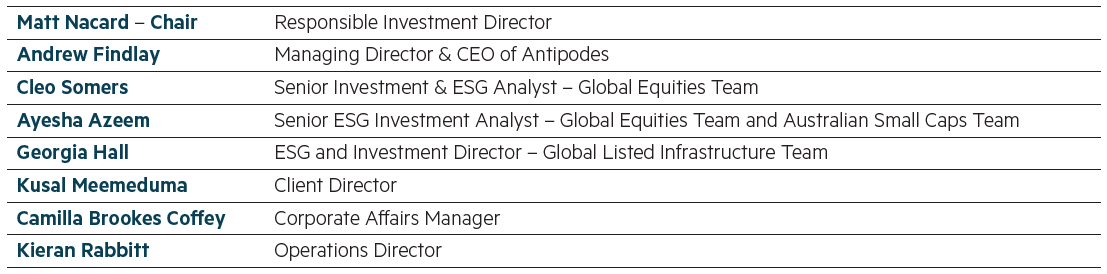
The Antipodes and Maple-Brown Abbott investment teams operate autonomously, however they each share long standing commitments to ESG integration. The delivery of our responsible investment strategies is a firm-wide undertaking. The Responsible Investment & ESG Committee (‘RI & ESG Committee’), governs ESG-related activities across our business strategy, operations, and investment practices, and is chaired by the Director of Responsible Investment. The Committee also reports to the Board, enabling Board-level oversight of the firm’s responsible investment approach and processes. The RI and ESG committee include:
Table 1: Antipodes Group RI and ESG committee members
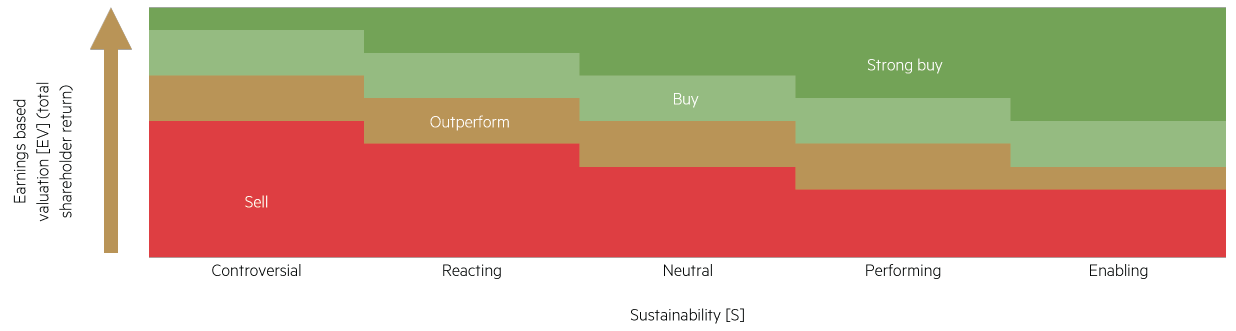
The Fund applies ESG integration in line with our defined investment process. Sustainability is one of the central factors of how we invest in the Australian Small Companies strategy. Our stock recommendations are influenced by two primary factors, with 30% derived from sustainability metrics, including ESG considerations. The remaining criteria is derived from a traditional earnings-based valuation, driven largely by medium-term earnings growth forecasts.
The sustainability score is comprised of the following: (1) external forces including industry dynamic and industry sustainability analysis; and (2) internal forces including strategic positioning, ESG and corporate governance factors. Corporate governance is particularly important at the smaller end of the market due to its impact on the ability of a company to attract capital and manage growth appropriately. For this reason, we place a higher weighting on corporate governance to reflect its outsized impact on company returns, a conclusion supported by extensive back-testing.
This sustainability rating serves as a crucial component of the ‘buy-sell matrix’ (Figure 1), wherein companies with lower sustainability scores require a higher earnings-based valuation (expected total shareholder return) to be assessed as a ‘Buy’ or ‘Strong buy’. In this way the sustainability score is a key input into a stock’s recommendation rating and position sizing.
Our sustainability assessment is proprietary and reflects our own analysis; we do not rely on third-party ESG ratings. The strategy is supported by dedicated in-house ESG research. This is particularly important at the smaller end of the market, where third-party ESG coverage is thin and often absent, and where proprietary, company-by-company analysis is essential to forming a genuine view. Furthermore, the sustainability score is not static. We continually assess which ESG issues are financially material to the companies we hold, and incorporate emerging considerations, (such as physical climate risk and AI governance) into our analysis as their relevance to long-term risk and return becomes clearer.
Figure 1: Buy-sell matrix for the Maple-Brown Abbott Australian Small Companies Fund
Our responsible investment approach extends beyond stock selection and position sizing to active ownership. Where our analysis identifies ESG risks or opportunities that are material to a company’s long-term value, we engage directly with company boards and management to better understand and advocate for outcomes in the long-term interests of shareholders. Engagement outcomes feed back into our sustainability assessment. Proxy voting is a further expression of this stewardship: we seek to vote at every company meeting in line with our voting policy, abstaining only where we are not permitted to vote, treating voting as an integral part of managing ESG risk. Our engagement activity and voting record over the period are set out in the ‘Stewardship’ section discussed in this report.
Exclusions
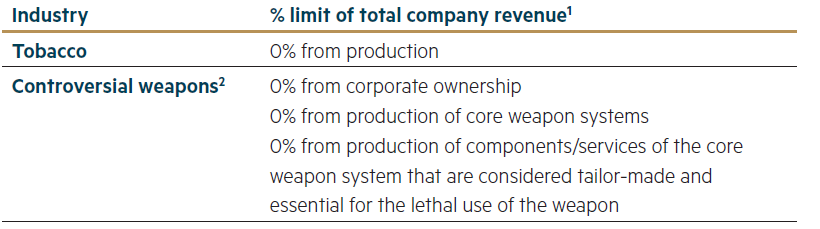
While ESG integration through our sustainability score is the primary way we manage ESG risk, we also apply a set of exclusions across the Fund. These reflect activities we consider inconsistent with responsible investment.
We deliberately keep the exclusion list narrow. Our approach is grounded in integration rather than broad negative screening: in most cases we believe engagement and a lower sustainability score are more effective tools than exclusion for managing ESG risk while preserving the breadth of the investable universe. The current criteria are set out below.
Table 2: Australian Small Companies Fund exclusions
Stewardship
Active ownership is a core part of how we manage risk and protect returns for our clients. Where our analysis identifies issues material to a company’s long-term value, engagement and voting are the tools we use to act on that view, testing management’s approach, and where warranted, pushing for change that supports shareholder value. We treat stewardship as an extension of the investment process.
Key themes over the 2026 financial year
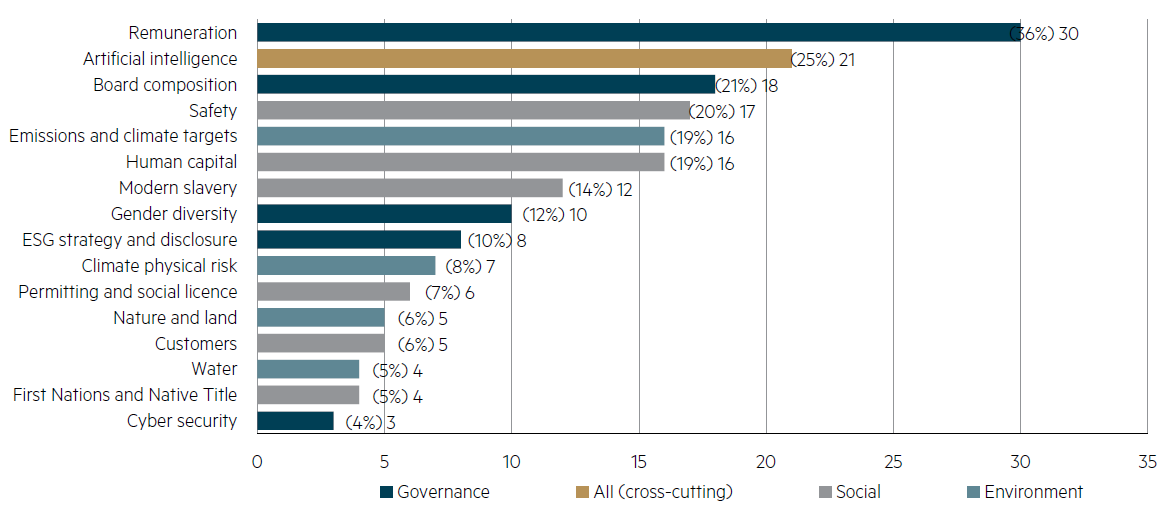
Engagement is central to how we exercise stewardship. At the smaller end of the market, we are often in direct dialogue with the founder, chair or chief executive, engaging while a company is still shaping its policies, and the change we seek is typically measured over several years rather than a single year. Over the 2026 financial year we held 84 engagements. The following chart sets out the themes raised. Our agenda was governance-led, remuneration and board composition together accounted for the largest share while AI emerged as a significant new focus, and a cluster of real-world environmental and social issues ran through engagements.
Figure 2: Key engagement themes over the 2026 financial year – Number of engagements
Remuneration
Remuneration was a consistent focus throughout the 2026 financial year, reflecting the central role corporate governance plays in Australian small companies. Most of these engagements were held directly with board members ahead of voting at Annual General Meetings (AGMs). When assessing a company’s approach to remuneration, we focus on three key attributes: transparency, alignment with shareholder interests, and the use of appropriate key performance indicators (KPIs) to drive company performance.
Several engagements centred on encouraging greater disclosure of Short-Term Incentives (STI), so that investors have clear visibility of how executives are rewarded. We also pressed for Long-Term Incentive (LTI) targets that represent a genuine stretch, and for long-term incentives to be tied to meaningful performance conditions.
Artificial intelligence (AI)
AI was an emerging theme this year, as a growing number of companies began to integrate AI into their businesses and workflows. This integration brings real benefits, but also introduces risks across cyber security, governance and human capital. In our conversations with company management, we focused on AI governance, including:
- Whether the company has implemented a clear AI policy
- Who holds responsibility for AI at the executive and board level
- How the board is building its AI-related skills
- How companies are engaging their workforce on the rollout of AI
- How cyber security risks are being managed as AI is adopted
These engagements reinforced our view that Australian small companies are still in the early stages of adoption. While most have an AI policy in place, there is considerably more work to be done on AI governance – this will remain a focus of our engagement in the coming financial year.
AI Governance – findings from our engagement program
We engaged with a range of companies across financial services, healthcare, insurance and technology to understand how AI is being governed and how its risks are being managed. Our questions focused on board oversight and responsible AI policy, and on the point at which AI should and should not be relied upon. Several consistent findings emerged.
Governance maturity varies widely. The most advanced companies we engaged with had established formal oversight ahead of broad deployment, in the strongest cases, a dedicated senior AI executive, a documented responsible AI policy suite, and a governance forum tasked with monitoring bias, model performance and hallucination risk, reporting to a designated board committee. Other companies had adopted a policy and taken their approach to the board but were less developed in day-to-day oversight, while some were still at the piloting stage with governance yet to catch up to ambition. We regard clear, board-level accountability, rather than the extent of adoption itself, as the more reliable indicator of a company’s readiness to manage AI risk.
Public disclosure lags internal practice. Several companies had meaningful internal responsible AI policies but no external, public-facing equivalent. Where we raised this, companies were generally receptive and indicated they would consider public disclosure as their approach matured, particularly for customer-facing applications. We see the gap between internal practice and external transparency as an area for continued engagement.
Human oversight is the prevailing principle. Across sectors, companies were consistent in positioning AI as a tool for processing, efficiency and decision support rather than autonomous decision-making, with a human retaining responsibility for judgement. This was most pronounced in high-stakes settings, where companies were clear that AI is used to improve workflow and assist staff but not to make the final assessment, with outputs subject to human review. A recurring observation was that the nature of this oversight is evolving as AI absorbs more routine tasks, with implications for the skills companies will need to develop.
Workforce. Companies are at varying stages of considering the workforce implications of AI adoption, and we discussed this where relevant. We will continue to monitor how these considerations develop as deployment matures.
Our assessment. These engagements reinforced our view that AI risk is best assessed as a governance question first. The companies managing it well share common features: early and documented board oversight, a willingness to define where AI should not be used, and a considered approach to disclosure. The most common gaps were public-facing transparency and, in some cases, the maturity of oversight relative to the pace of adoption. We will continue to engage on these areas, and we regard responsible AI governance as an increasingly material component of our overall assessment.
Board composition
Board composition is another key governance focus, given the central role the board plays in overseeing the company on behalf of shareholders. This matters particularly in smaller companies, where boards are often small, founder-influenced and lighter on independence than at the larger end of the market. Our conversations on this topic centred on encouraging majority-independent boards and independent chairs, so that oversight is genuinely at arm’s length from management. We also engaged on board diversity, advocating for female participation of at least 30%, rising to 40% in industries with a larger female workforce, on the basis that a broader range of perspectives supports better decision-making.
Beyond independence and diversity, board composition also concerns the depth of skills and experience directors bring to the table. In a market that is evolving quickly (with emerging risks such as artificial intelligence and cyber security demanding new competencies) we discussed how boards are refreshing their skills, building capability among existing directors, and planning for succession to ensure the right expertise is in place over time. In smaller companies these are typically multi-year conversations, and we track progress across reporting periods rather than expecting wholesale change within a single year.
Human capital
Human capital is consistently an important theme, particularly for companies operating in tight labour markets or in industries that depend on highly specialised skills. Our engagements focused on how companies attract and retain talent, and on the systems they have in place for employee development and learning.
Encouragingly, many Australian small cap companies take real pride in building talent from the ground up. A notable number run apprenticeship, internship and graduate programs, reflecting a deliberate focus on bringing talent in early and developing their skills over time. This home-grown approach helps build loyalty and a durable pipeline of capability a meaningful advantage in competitive labour markets, and a sign of the long-term mindset we look for when assessing how companies manage their workforce.
Safety
Safety is a critical consideration, particularly given the industrial and resources exposure across the strategy, where the consequences of poor safety management can be severe for workers and shareholders alike. When assessing how well a company manages safety risk, we look for several indicators: a strong safety record, regular and embedded safety training, and, where material to the business, the inclusion of safety measures in executive incentive plans, so that accountability for safety extends to the most senior levels.
Over the year safety was raised in a number of our engagements. These conversations covered the setting of safety targets within incentive structures, the company’s record on safety incidents, the quality and transparency of safety statistics disclosed to the market, and the strength of the underlying safety culture.
Proxy voting
Proxy voting is an important part of our investment process, and one we approach with considerable due diligence. We endeavour to vote every ballot, abstaining only where we are restricted from voting.
While we have access to proxy advisers, we form our own view, assessing executive remuneration and board composition against our voting principles. These principles include:
- Remuneration and incentives that are transparent and aligned with shareholder interests
- Pay that is genuinely linked to performance
- Boards that are diverse and hold the appropriate mix of skills and experience
Engaging with company boards and management ahead of placing our votes is also a critical component of our process, allowing us to hear the company’s perspective and encourage better governance.
Our voting statistics for 2026 financial year are set out below.
Table 3: Fund proxy voting statistics

Some notable examples where we voted against include:
- A non-independent chair sitting on a majority non-independent board
- A non-independent director on a majority non-independent board
- Incentive plans with weak performance targets
- Incentives awarded based on time served rather than performance
- Cases where a company has fewer than 30% women on the board with no clear pathway to improvement, and where engagement has shown this is not a priority for the board
- Poor disclosure of remuneration, in particular short-term incentives
That said, we recognise that in Australian small companies we must apply some flexibility in our governance expectations, given the size of these businesses and the prevalence of founder-led companies. Our primary approach is therefore multi-year engagement, giving companies the opportunity to improve over time.
We have written extensively on governance in Australian small companies, including the particular considerations that arise in founder-led businesses. These articles are available on the Maple-Brown Abbott website.
> Corporate governance and founder-led small caps: Balancing Investor expectations with entrepreneurial growth
> The G in ESG: a vital consideration for small caps
SRG Global (SRG) – Governance improvement through sustained engagement
Governance change is achievable through engagement, but it takes time.
Background
When we first assessed the company’s governance, remuneration and board practices fell short of our expectations on several counts. Remuneration disclosure was poor: STI financial targets were not disclosed, LTI targets were not disclosed, and the LTI performance period was only two years, which we did not consider sufficiently long term. Board composition was also a concern, with a non-independent chair, a board that was not majority independent, and female representation of 25%. These shortcomings were reflected in a remuneration strike in 2022, which provided the catalyst for a sustained engagement programme.
Our engagement
We engaged with the company consistently over several years, focusing on the transparency of its remuneration framework, the alignment of incentives with long-term performance, and the independence and composition of the board. Our approach prioritised constructive dialogue, recognising that durable governance change is incremental.
Outcomes
Progress was evident year on year. From 2023, the company disclosed both STI and LTI hurdles and outcomes, and in 2024 it extended the LTI performance period from two years to three, better aligning executive reward with longer-term value creation. By 2025, disclosure had broadened further to include personal objectives within the STI. Board composition strengthened in parallel: new directors were appointed, an independent chair was established, and by 2026 the board was majority independent, with female representation of 33%.
Our assessment
In 2025 the company received a further remuneration strike, driven by the granting of retention rights to the CEO and the quantum of incentives, which proxy advisers deemed excessive. The board had engaged with us prior to implementing the retention rights. We voted in favour of the remuneration report, on the basis of strong company performance, the CEO’s importance to ongoing value creation, and the fact that the retention rights were subject to performance conditions. This reflects our willingness to exercise independent judgement rather than defer automatically to proxy adviser recommendations, while continuing to hold the company to a high standard on disclosure and alignment. It also illustrates that engagement is an ongoing process.
Climate
Climate is one of a range of considerations we take into account when engaging with and analysing companies. It can be a source of risk, and in some cases opportunity, though its relevance varies considerably from company to company. Many businesses at the smaller end of the market are still in the early stages of measuring their emissions, setting targets and reporting on climate, and where it is relevant our role is to encourage steady progress.
Our engagement over the year touched on two areas. The first is emissions and climate targets: how companies are measuring their emissions, the targets they set to reduce them, and the quality of their related disclosure. The second is physical risk: how companies exposed to effects such as extreme heat and water stress are assessing and adapting to them. As with our engagement more broadly, we treat these as gradual, multi-year conversations.
Some notable examples of our engagement include:
- Discussing the setting of emissions reduction targets with a gas producer
- Encouraging the setting of emissions reduction targets, and discussing the physical risks of climate change, with a bauxite miner
- Exploring the opportunities that climate change physical risk presents for an infrastructure services provider
- Exploring the opportunities in climate change adaptation and resilience services with an engineering and asset services company
At a strategy level, climate risk is managed in the portfolio construction process by the Australian small caps team. The team is informed by the climate research conducted by the dedicated ESG Investment Analyst. The Australian small caps team may also be informed by any developments by the Antipodes Group RI and ESG Committee.
As mentioned above, the sustainability rating directly influences stock position sizing. Climate risks and opportunities are included in the industry sustainability scoring and the company’s response to these risks and opportunities are included in the company’s sustainability score. In this way, both the risks and opportunities of climate are included in the portfolio construction process. Climate-related risks are managed through prudent position sizing and active stewardship
Over the short to medium term, we have identified physical risks of climate change as a material Fund risk and are engaging with companies to better understand how these risks are being managed. Accordingly, the physical risks of climate change were a key topic of engagement this financial year.
We recognise that the energy transition presents long-term risks; however, most of our fossil fuel exposure is in natural gas, which we anticipate will continue to play a significant role throughout this transition.
Due to the poor disclosure of company climate data at the smaller end of the market, we are unable to set Fund emissions targets currently and much of the available data is modelled by our data provider. However, with the implementation of mandatory reporting we anticipate increased disclosure overtime, which we believe will support our decision-making process.
Table 4: Fund vs. Benchmark weighted average carbon intensity metrics. Source: S&P Capital IQ June 2026

The Antipodes Group Climate Report provides further details on our approach to climate risk management and stewardship.
Looking ahead
Emerging themes for the 2027 financial year
As we look forward to the year ahead, we have identified several themes that are becoming increasingly relevant to the companies in which we invest and to the broader market in which they operate. The areas set out below reflect developments we are observing both through our ongoing engagement with company boards and management and through the evolving regulatory and operating environment. In keeping with the long-term, multi-year nature of small-cap investing, we anticipate that these themes will develop progressively over several reporting periods, and we will continue to monitor them as they evolve.
Artificial Intelligence
AI continues to be a prominent theme. It emerged strongly in our conversations this year, and we expect it to keep building as more companies move from experimenting with the technology to embedding it in their operations. That shift brings a fresh set of questions to the fore: which parts of the business AI is being applied to, who at the board and executive level is accountable for it, how the workforce is affected, and how the associated cyber security and data privacy risks are managed. In smaller companies, where resources and in-house expertise are often more limited, how boards build the capability to oversee AI will be worth watching. We see this as a theme in its early stages, with expectations and practice likely to mature over several years.
Social risk
Corporate governance has long been the cornerstone of our ESG assessment, reflecting its direct bearing on shareholder returns. A period of sustained cost-of-living pressure and widening inequality is, however, elevating social risk to a point of clearer financial materiality.
Economic stress alters consumer behaviour, labour dynamics and political priorities. Companies perceived to act unfairly become exposed to labour disruption, regulatory intervention and reputational damage, such that a company’s social licence to operate becomes a material consideration in our analysis.
We are giving particular attention to five areas:
- Industrial relations
- Affordability and reputation
- Government intervention
- Employee retention and engagement
- Human rights
We are accordingly integrating the assessment of social licence and consumer sentiment alongside governance within our process.
Physical climate risk
The physical risks of climate change remain a growing consideration. Events such as the recent European heatwaves are a reminder that a changing climate can have tangible effects on companies, from disruption to operations and supply chains through to the health and safety of the workforce. For a strategy with exposure to resources and industrials, physical effects such as extreme heat and water stress are among the more relevant climate considerations. In our experience, awareness of physical climate risk remains uneven across the small-cap space, with a number of companies yet to consider their exposure in any depth. We will continue to engage with companies on how they are building resilience and mitigating the physical risks of climate change.
Conclusion
This report has outlined the way ESG considerations were integrated into the management of the Australian Small Companies Fund over the financial year. Our approach combines a proprietary sustainability assessment, in which corporate governance carries particular weight and an active program of stewardship.
Looking to the year ahead, we have identified artificial intelligence, social risks, and physical climate risk as themes likely to develop progressively across future reporting periods. We will continue to monitor these matters and to report upon our activities.
1 Net revenue derived from specific activity relative to total net revenue, as reported in audited company financial statements. International Financial Reporting Standards (IFRS) or similar standards such as Generally Accepted Accounting Principles (GAAP) will be considered best practice methods for the calculation of net revenue. In cases where audited net revenue data is unavailable, we may utilise non-audited figures or estimates based on data sourced from reputable third-party sources or publicly available information.
2 Our definition of controversial weapons includes anti-personnel mines, biological and chemical weapons and cluster weapons, the production of which is in direct contravention of international treaties ratified by Australia
3 Abstained votes consist solely of votable items where we are not permitted to vote.
Disclaimer
This information is prepared by Antipodes Partners Limited (“Antipodes”) (ABN 29 602 042 035, AFSL 481 580) as the Investment Manager of the Maple-Brown Abbott Australian Small Companies Fund (ARSN 658 552 688) (‘the Fund’). Maple-Brown Abbott Limited (‘MBAL’) (ABN 73 001 208 564, AFSL 237296), is the Responsible Entity of the Fund. MBAL and Antipodes are subsidiaries of Antipodes Partners Holding Limited (ABN 91 602 828 526). The Product Disclosure Statement (‘PDS’) and Target Market Determination (‘TMD’) of the relevant Fund are available via the links below. Any potential investor should consider the PDS and TMD before deciding whether to acquire, or continue to hold units in, the Fund.
Link to the PDS
Link to the TMD
For historic TMD’s please contact MBAL’s Client Service Phone +61 8059 7671 or Email invest@maple-brownabbott.com.
This information is for general information only. It is not intended as a securities recommendation or statement of opinion intended to influence a person or persons in making a decision in relation to investment. It has been prepared without taking account of any person’s objectives, financial situation or needs. Any persons relying on this information should obtain professional advice before doing so. Past performance is for illustrative purposes only and is not indicative of future performance.
Whilst Antipodes and MBAL believe the information contained on this webage is reliable, no warranty is given as to its accuracy, reliability or completeness and persons relying on this information do so at their own risk. Subject to any liability which cannot be excluded under the relevant laws, Antipodes and MBAL disclaim all liability to any person relying on the information contained on this webpage in respect of any loss or damage (including consequential loss or damage), however caused, which may be suffered or arise directly or indirectly in respect of such information. This disclaimer extends to any entity that may distribute this communication. Any opinions and forecasts reflect the judgment and assumptions of Antipodes and its representatives on the basis of information available as at the date of publication and may later change without notice. Any projections are estimates only and may not be realised in the future. Unauthorised use, copying, distribution, replication, posting, transmitting, publication, display, or reproduction in whole or in part of the information contained in this communication is prohibited without obtaining prior written permission from Antipodes. For more information, including our Financial Services Guide, visit maple-brownabbott.com.

Ayesha
Interested in investing with us?
Investment Insights
Dougal Maple-Brown’s shocking prediction


Data center growth in Iberia


2026 Australian Small Companies ESG Report

Beyond the chips five thematics from our US trip